
The Challenges of Heating a Multi-Storey House
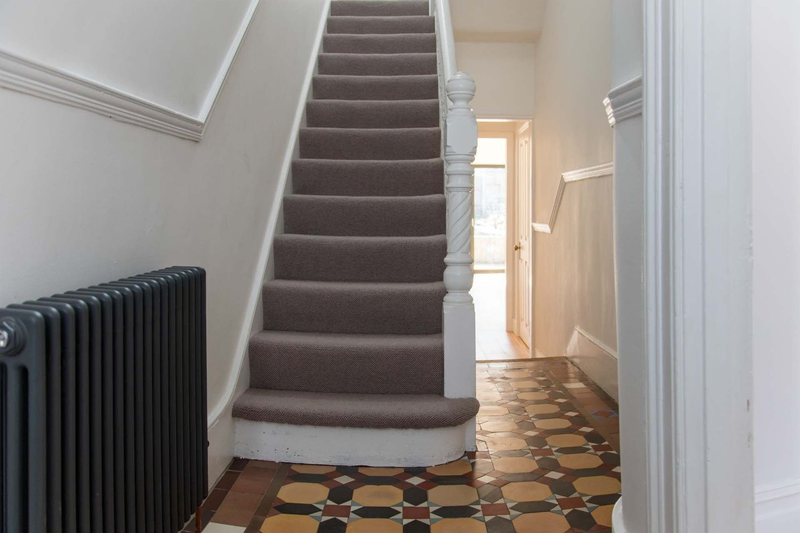
A comfortable ground floor, overly warm upstairs bedrooms, and a basement that is difficult to heat: these temperature differences are common in multi-storey homes. Heating a multi-storey house presents challenges related to both the building’s characteristics and the heating equipment installed. Understanding these factors helps you choose heating solutions better suited to the needs of each level.
Rising heat that leaves the basement cold
Heat rises through a house because of the stack effect: warm air is lighter, so it climbs and builds pressure near the roof. In a two-storey house, that is why heat rises upstairs, leaving the upstairs too hot while the basement stays cold.
This air escapes through holes in the ceiling and around upper-storey windows. Down low, the lower pressure pulls outside air in through basement windows and the gaps around the floor joists, the beams that carry the floor. The effect grows with the height of the house, the air leakage and the gap between indoor and outdoor temperatures, so it peaks on a January night. Sealing leaks in the attic and around the joists weakens it without touching the heating.
One thermostat for every level
A thermostat located on the ground floor regulates heating based on the temperature of that level. Once the set temperature is reached, the upper floor may be too warm while the basement remains too cold. This imbalance is particularly common in homes heated by a furnace or a central forced-air heat pump.
Electric baseboard heaters allow independent temperature control in each room. However, heat rising from the lower levels can cause upstairs temperatures to exceed the thermostat setting.
Dampers that need two settings
Dampers, the small flaps inside the ducts, balance the heat between floors, and the winter setting is not the summer one.
Balancing heat between floors remains a persistent problem, and adjusting the dampers may help. With a central heat pump, which heats and cools through the same ducts, that double setting matters even more.
Review the dampers at each change of season, so one floor does not stay too warm while another goes short. Mark the position of each damper before moving it. Closing the vents in a room works less well than controlling the air in the ducts, and in leaky ducts, closing a damper may only push more air out through the leaks.
A floor the ducts do not reach
A floor without ducts, a bedroom over the garage or a basement finished after the fact often sits outside the central system, and a unit for that floor solves it.
A finished basement adds a lived-in level the original ducts were never sized for. In a house with no ducts upstairs, a wall-mounted heat pump does that job: its indoor unit heats the room where it hangs without changing anything else in the house.
Heating solutions tailored to your multi-storey home with SAF Combustion
Heating a multi-storey home requires a solution that accounts for the heating needs of each level. Equipment selection, sizing, and placement play a key role in heat distribution.
SAF Combustion helps you choose a heating system suited to your home’s layout in Gatineau. Depending on your needs, a central heating system, independent heating units, or a combination of both may be considered to improve comfort on each floor.
Trust SAF Combustion with your heating project and benefit from a solution tailored to your home’s specific characteristics.
Frequently asked questions
Can a wall-mounted heat pump heat two floors?
A wall-mounted heat pump mainly heats the floor where its indoor unit hangs. Some heat climbs the stairs, but closed bedrooms get little of it. For two floors, plan one indoor unit per floor, or keep baseboards as backup elsewhere.
How much does a wall-mounted heat pump for one floor cost?
The cost of a wall-mounted heat pump depends on the required capacity, the model selected, and the specific installation requirements. SAF Combustion offers a free estimate to determine the cost of a unit suited to the heating needs of your floor.
Should I keep my baseboard heaters with a heat pump?
Yes. In deep cold, another heating system has to take over from the heat pump, and baseboards do that job. They also heat the rooms the indoor unit does not reach.
More Posts
- Commercial Heating in Gatineau: 7 Things to Check Before Winter
- Why Do Some Rooms in Your House Stay Cold Even With the Heat On?
- Heat Pump Installation: Every Step From Quote to Start-Up
- Heating in Gatineau: Central Heating or Room-by-Room Systems?
- When to Replace an Old Heating System
- Advantages of Combining Heat Pumps with Radiant Heating
- Best heat pump systems for homes in Gatineau
- Building Mechanics in Gatineau – Practical Steps to Reduce Energy Losses
- Heating in Gatineau: The Mistakes That Wear Down a System Too Quickly
- Furnace in Gatineau and Indoor Air Quality: A Commonly Overlooked Duo
- Extreme Cold, Steady Comfort: How to Optimize Your Heating in Gatineau Without Raising Your Bill
- Radiant Floor Heating: Discreet Yet Unmatched Comfort During Winter
- Heating in Gatineau: Which Solution Is Best for an Older Home?
- The Different Types of Air Exchangers in Gatineau and Their Residential Benefits
- Signs It’s Time to Replace Your Heating System in Gatineau
- What Types of Flooring Work Best With Radiant Heating in Gatineau?
- Is Your Heat Pump in Gatineau Using Too Much Electricity? Here’s Why
- Key Criteria for Properly Sizing a Heat Pump in Gatineau
- Radiant Floor Heating in Gatineau and Energy Efficiency: What Savings to Expect?
- Air Exchangers in Gatineau: What Role do They Play in Reducing Allergens?
- Common Ventilation Maintenance Mistakes in Gatineau and How to Avoid Them
- Heat Pumps in Gatineau: Safety, Maintenance, and Long-Term Performance
- How to evaluate commercial ventilation options in Gatineau
- Air Conditioning Myths That Are Costing You Money
- What Size Air Conditioning Unit Do I Need For My Home?
- Air Conditioning vs Heat Pump in Gatineau: Which is More Energy-Efficient?
- How To Reduce Your Air Conditioning Energy Consumption This Summer
- When to Replace vs. Repair Your Air Conditioning in Gatineau : A Practical Guide
- How To Make Your Air Conditioning More Energy Efficient in Gatineau’s Changing Climate?
- How to Improve Indoor Air Quality with Commercial Ventilation in Gatineau?
- Commercial Ventilation in Gatineau: A Key Component of Indoor Air Quality
- Top 5 HVAC Innovations for Summer 2025: Smarter Cooling, Cleaner Air, and Lower Bills
- Air conditioning in Gatineau: why choose a trusted contractor?
- Prepare your air conditioning system in Gatineau this spring
- Commercial ventilation in Gatineau : Why your business needs an upgrade in 2025